
Real Costs: Interactive TMS Price Scenarios and How to Estimate Your Bill

Why transparency matters
TMS (Transcranial Magnetic Stimulation) is an evidence-based, clinic-delivered treatment that can be life-changing- but cost uncertainty creates real friction for patients. Clear, practical price guidance helps prospective patients make informed decisions, accelerates bookings, and reduces surprises after a denial or partial coverage. Creative Wellness aims to be transparent about common fees and how insurance changes the math.
What is typically included in a TMS bill
When you look at a TMS invoice, the final number usually bundles several line items:
- Initial psychiatric evaluation/consultation - psychiatry intake and medication review.
- Mapping/motor threshold session - a one-time clinical step to find your treatment target.
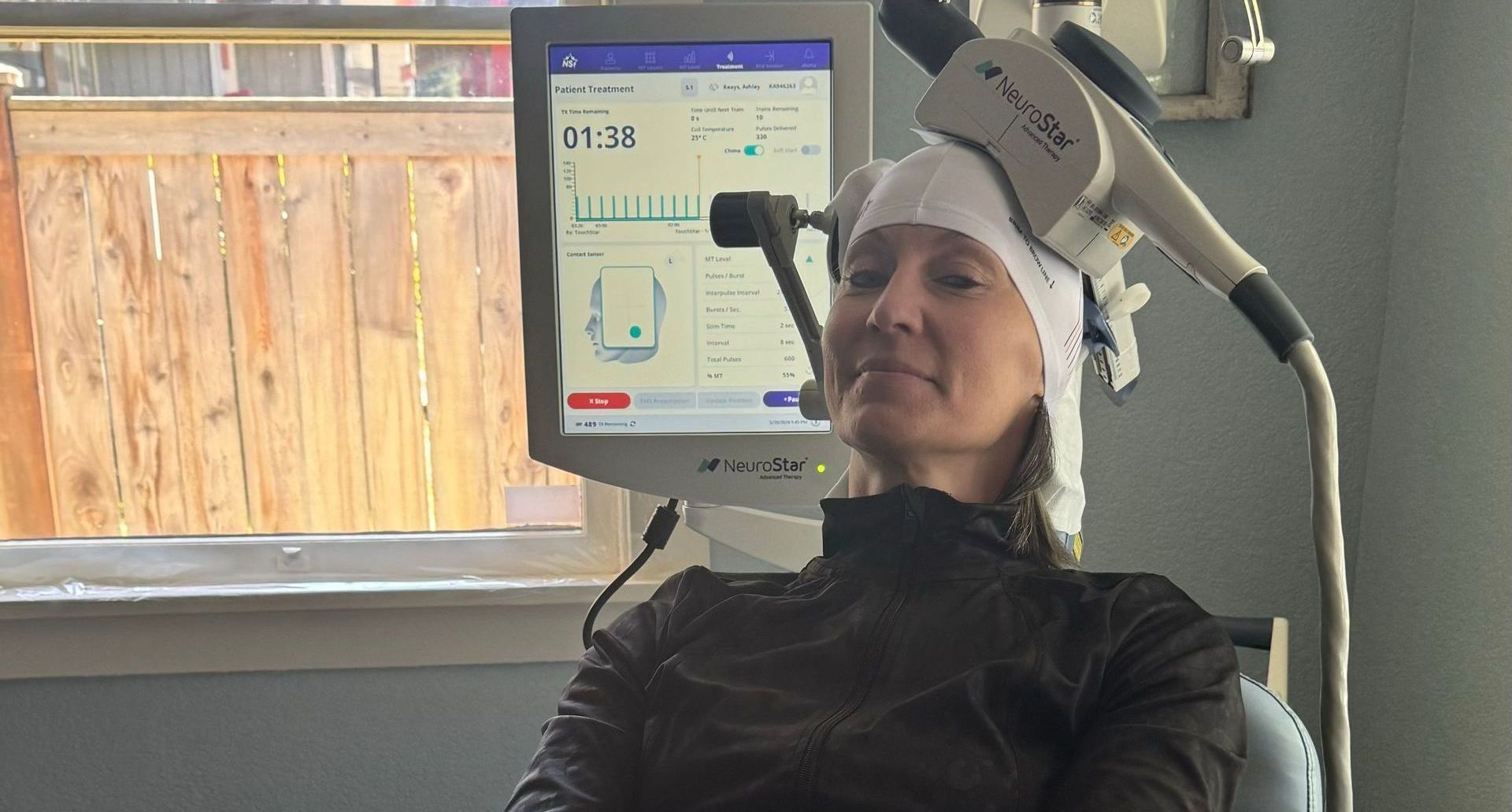
- TMS sessions (the largest line item): daily clinic visits, commonly 4–6 weeks, Monday–Friday. Many clinics use 30–36 total sessions for a full course, depending on protocol.
- Facility fees/technician time - per-session staff, chair time, consumables.
- Psychiatry follow-ups/medication management during the course (if needed).
- Optional tests or services: pharmacogenetic testing (e.g., Tempus NeuroPsych), Spravato sessions, or other consults. Tempus NeuroPsych testing and consults are listed in the clinic’s pricing guide as an example service.
- Maintenance or booster sessions may be recommended later, if clinically indicated.
Common hidden or variable costs
- Prior authorization work/appeals (time the clinic spends) - sometimes built into admin fees.
- Insurance co-pays and deductibles - these can be large if you haven’t met your deductible.
- Out-of-network charges - if the clinic or device isn’t accepted in-network, you may face higher bills.
- Maintenance sessions (not always covered) - boosters or maintenance packages can be OOP.
We Accept Insurance
Take a quick 1-minute quiz to check if you meet typical insurance criteria for TMS. It’s an easy way to see if you may qualify - no pressure, no commitment. If you're exploring other treatments or just want to talk it through, Get in touch. We're here to help you understand your benefits and next steps.





A simple formula to estimate your TMS bill
No math trickery - just a plain formula you can use to produce an estimate:
Estimated total = (Number of sessions × Average session price) + Mapping fee + Initial psychiatry consult + (Number of psychiatry follow-ups × psychiatry price) + Testing & extras (PGx, Spravato consults) + Facility/admin fees − Estimated insurance coverage (payments)
You can plug in real numbers below.
Example basis (clinic reference numbers): Creative Wellness lists a typical full course at around $5,000 (clinic listed example), and many courses run around 30–36 sessions, depending on protocol. That gives a rough per-session range:
- If a course is 36 sessions, $5,000 ÷ 36 ≈ = $139 per session.
- If a course is 30 sessions, $5,000 ÷ 30 ≈ = $167 per session.
(These are example calculations to help estimate — your clinic’s itemization may differ.)
Three realistic price scenarios (plain examples)
Below are three short, high-intent scenarios your patients will understand — each shows likely OOP ranges and why they differ.
Scenario A — In-network coverage, prior auth approved (best case)
- What happens: Your insurer pre-approves a full TMS course after prior authorization. The insurer pays the large majority of billed charges.
- Likely patient OOP: small co-pays or a partial deductible (varies by plan). Example: If insurer covers 80% of $5,000, patient OOP ≈ $1,000 (plus any consult copays).
- Why this is lower: Prior auth + in-network discounts reduce billed price. Creative Wellness does free benefits checks and helps with prior authorization.
Scenario B — Partial coverage / deductible not met (most common)
- What happens: Insurer covers some sessions but not all, or the patient has a high deductible. The patient pays co-pays or the full billed amount until deductible is met.
- Likely patient OOP: hundreds to a few thousand dollars — for example, if insurance covers 50% of a $5,000 billed course, patient OOP ≈ $2,500. Add consults, mapping, and testing if billed separately.
- Why this is higher: Deductible exposure and partial coverage drive up OOP costs.
Scenario C — No coverage / out-of-network (worst case)
- What happens: The patient pays most or all expenses out-of-pocket; clinic may offer a self-pay package or financing.
- Likely patient OOP: full course cost (example: ≈ $4,000–$7,000 depending on device, local pricing, and extras). Clinics often provide self-pay discounts or payment plans. Creative Wellness lists packages and financing options; consult the clinic for exact numbers.
How to build your own quick estimate (step-by-step)
- Ask the clinic for their base course price (or use $5,000 as a working example).
- Confirm the number of sessions your protocol uses (30, 36, or individualized).
- Add one-time fees: mapping/motor-threshold and initial psychiatry consult. (Estimate $150–$300 for each as a working range unless the clinic provides exact fees.)
- Add optional items: PGx testing (Tempus example ~$250), Spravato consults or other tests.
- Subtract estimated insurance payment: ask the clinic to run a free benefits check and estimate the insurer’s percentage. Creative Wellness commonly runs benefits checks to clarify coverage.
- Account for follow-ups or maintenance if you might need booster sessions later.
Practical tips to reduce your bill
- Get a free benefits check. Clinics often do this and can estimate your coverage and prior-auth needs.
- Ask about a self-pay package. Some clinics provide discounted bundles for self-pay patients.
- Request a pre-treatment price estimate in writing. Ask for line-item estimates for mapping, sessions, facility fee, psychiatry, and tests.
- Explore financing or payment plans. Many clinics have options to spread payments.
- Document prior medication/therapy trials. Clear evidence of treatment-resistant depression helps make the prior-auth case for coverage.
How much does TMS cost out of pocket?
It varies widely: with good in-network coverage your OOP may be a few hundred to ~$1,000; partial coverage or high deductibles commonly result in $1,000–$3,000 OOP; fully self-pay courses can be several thousand dollars. Ask the clinic for a specific estimate.
Does insurance cover TMS?
Many insurers cover TMS for eligible patients after prior authorization, but coverage depends on plan details and documented treatment history. Clinics typically assist with prior auths and appeals.
What about maintenance sessions or boosters?
Maintenance and booster sessions are sometimes recommended; they may not be covered by insurance and are often billed separately. Plan for possible future costs when you budget.