Can You Keep Working During TMS Therapy? What Patients Ask Most

Ashley Keays • January 13, 2026


Quick Overview


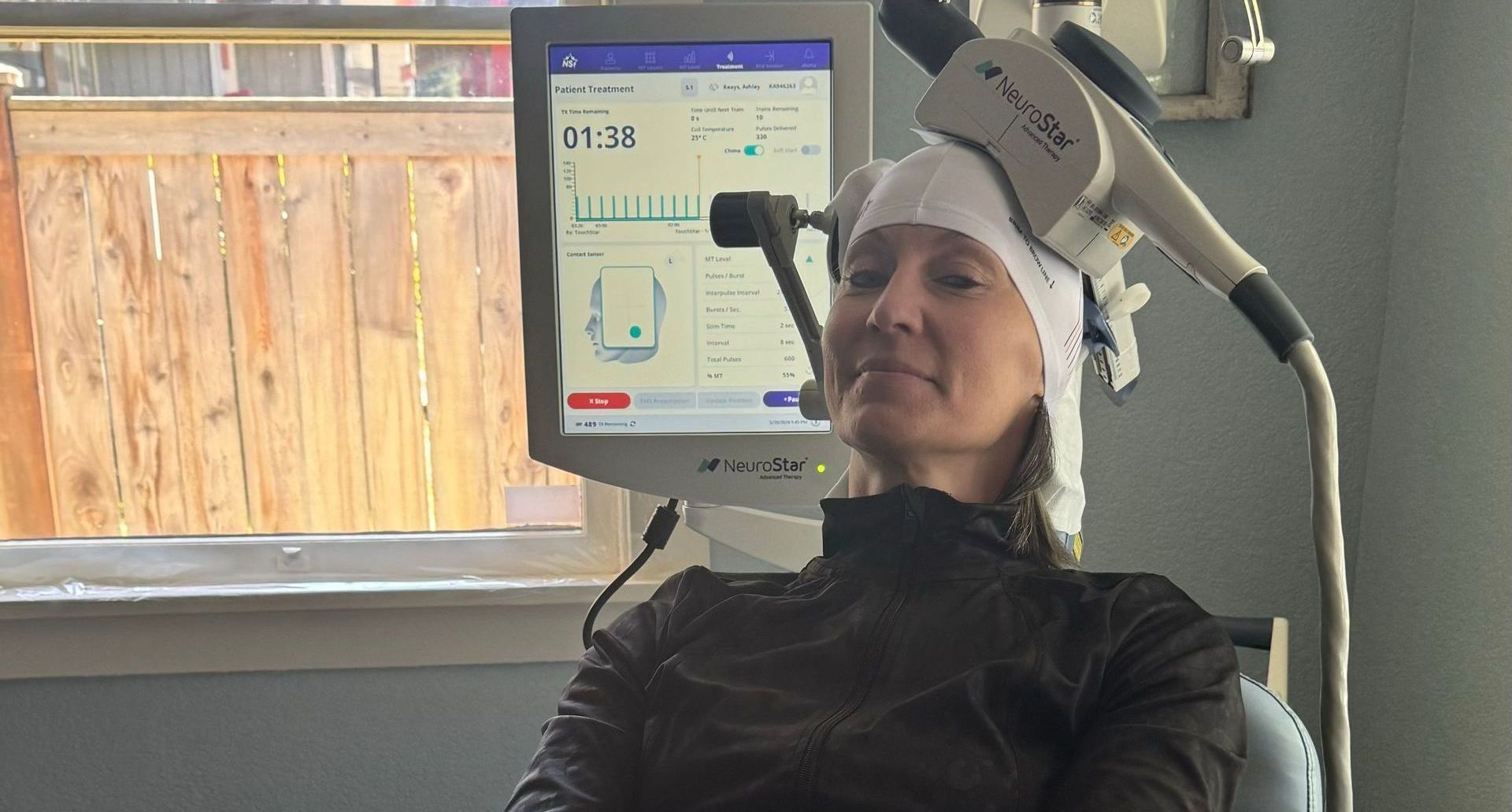
Yes - in most cases. TMS (Transcranial Magnetic Stimulation) is an outpatient, non-systemic, and non-sedating treatment designed so that most people can return to their daily activities, including work, right after sessions. Below, we cover what to expect during a typical course, common side effects, scheduling tips for working patients, and exactly when you might need to take time off or adjust your work schedule.


What a typical TMS course looks like


Most TMS courses are administered five days a week (Monday–Friday) for about 4–6 weeks. Sessions themselves usually last about 20–40 minutes, and many protocols are 20 minutes or less. Before treatment begins, you’ll have an initial consultation and a mapping/motor-threshold assessment that determines the precise target and dose for your daily sessions. Because sessions are short and non-sedating, patients are generally able to drive themselves home and return to their normal daily plans after each appointment. That means many people keep working during their treatment. 


Because sessions are short and non-sedating, patients are generally able to drive themselves home and return to their normal daily plans after each appointment. That means many people keep working during their treatment.


Common side effects and how they affect work


The most common effects reported during TMS are mild scalp discomfort or headache, which usually resolve quickly after a session. These side effects rarely require extended time off work. A small percentage of patients experience a temporary increase in symptoms mid-course (sometimes called the “dip”), and clinicians monitor for that and offer support. If you do experience unexpected or persistent effects, your care team will review your treatment plan with you. 


Read More: TMS Benefits and Side Effects


Practical scheduling tips for working patients


Here are practical steps most working patients use to keep work and treatment balanced:


  • Schedule sessions around your workday. Book sessions early morning, lunch hour, or late afternoon so they fit with your routine. Because sessions are short, many people attend without missing a full workday.


  • Work remotely on session days if possible. If your job allows flexible/remote work, doing your session near your workspace or working from home afterward reduces commute time.


  • Plan for the occasional “dip.” About 10–15% of patients may feel a temporary worsening of symptoms mid-course. If your job is safety-sensitive (driving, heavy machinery), talk with your clinician about timing or remote options.


  • Talk to your employer in advance. If you expect to need flexibility, consider a short note from your clinician or HR conversation - many employers will accommodate a 4–6 week daily-treatment schedule.


  • Use short breaks wisely. The treatment chair time is often 20 minutes; factor in check-in and any brief observation, and you’re typically looking at a 45–60 minute block out of your day. 


We Accept Insurance

Take a quick 1-minute quiz  to check if you meet typical insurance criteria for TMS. It’s an easy way to see if you may qualify - no pressure, no commitment. If you're exploring other treatments or just want to talk it through, Get in touch. We're here to help you understand your benefits and next steps.


Eligibility Quiz

Special considerations: Spravato or other clinic-based treatments


If you’re also considering or receiving clinic-administered treatments like Spravato (esketamine), note that Spravato requires a supervised recovery period and patients must arrange a ride home - it’s not safe to drive immediately afterward. That means you’ll need a slightly different work plan on Spravato days (plan for recovery time and transport). 


What if TMS doesn’t seem to be working - will that affect work?


If your symptoms don’t improve as expected, your clinical team will reassess mapping, dosing, and the overall treatment plan - and discuss options including continuing, repeating, or modifying the course. Any change in your functional status (energy, mood, concentration) can affect job performance, so it’s important to communicate with your clinician early. Together, you can adjust scheduling or consider short breaks from work if clinically indicated.


Tips for employers/managers (what to recommend)


If you’re an employer or manager supporting a team member having TMS:


  • Allow flexible scheduling for daily treatments for 4–6 weeks.


  • If possible, permit remote work or flexible hours during the course.


  • Be aware that most employees can resume normal duties after sessions, but some may need occasional accommodations (shorter days, breaks) during a “dip.”


  • Encourage open communication and provide a contact for accommodations (HR or occupational health).


Insurance, documentation, and time-off


Many insurance plans cover TMS for eligible patients - Creative Wellness helps patients verify benefits and explain prior-authorization steps. If medical documentation is needed for work (short-term disability, FMLA, or an employer note), ask your care team - clinics commonly provide paperwork or letters outlining the treatment schedule and medical necessity when appropriate.


  • Can I drive after a TMS session?

    Yes - because TMS is non-sedating most people may drive and return to normal activities after sessions. (Spravato is an exception and requires a ride home.)

  • Will I need to take time off work?

    Most patients do not need ongoing time off. You may want short daily flexibility (45–60 minutes) during your course or occasional time off if you experience a temporary symptom increase. 

  • How soon will I notice improvement?

    Many people notice changes between sessions 20–30; some have delayed responses toward the end of week six. Your clinician will monitor progress and recommend next steps if response is limited.the 

  • What if my job is safety-sensitive?

    If your role requires alertness for safety (driving, operating machinery), plan sessions with your clinician so you’re safe at work; remote sessions or different scheduling may be advised. Also let your team/HR know so you can arrange accommodations.

Not Sure Where to Start? We Can Help

With so many treatment options, finding the right one can be overwhelming. Let’s make it easier. Answer a few quick questions, and we’ll help you discover what might work best for you

Take the Quiz →
People at a table, reviewing documents and signing. A tablet and two mugs are also on the table.
By Ashley Keays January 13, 2026
Quick Overview An insurance denial for TMS is stressful, but not the end of the road. Many denials can be reversed with a well-documented appeal, clinical support from your treatment team, and persistence. This guide gives you exactly what to do next - step by step - plus appeal templates you can use right away. Immediate steps when you get a denial Read the denial letter carefully. Note whether it’s a coverage denial, a medical-necessity denial, or a coding/prior-authorization denial. Look for appeal deadlines and the insurer’s appeals contact. Save everything. Keep the denial letter, any emails, and the date/time of phone calls. Request a written explanation of benefits (EOB) and the denial reason code. Ask the insurer for the precise reason and the name/phone number of the caseworker. Contact your clinic. Tell Creative Wellness (or your clinic) right away - we run benefits checks and handle prior authorization paperwork. Clinics commonly help with appeals and prior authorization documentation. Step-by-step appeals plan Step 1 - Verify deadlines & next actions Check the denial letter for exact appeal deadlines and whether an expedited review is possible (often called “urgent” or “expedited” appeal). Note timelines: insurers vary - some expect appeals within 30 days, others allow up to 180 days; urgent appeals are sometimes handled within 72 hours. Always use the insurer’s stated timeline. Step 2 - Gather records and evidence Collect everything your appeal will need: Denial letter & EOB (front & back) Copy of the insurance policy language if available (or the relevant medical necessity criteria) Clinical notes showing diagnosis and prior treatments tried (medications, therapy) Documentation of prior authorizations and prior-authorization communications (if any) TMS treatment plan and mapping/motor threshold notes, if available Letters from treating clinicians (psychiatrist, referring MD) stating medical necessity Peer-reviewed evidence or guidelines (Clinical TMS Society or key articles) — your clinic can supply suggested citations. Tip: Clinics routinely assemble this evidence for you and can create a provider appeal letter. Clinics also handle prior authorization paperwork and appeals logistics. Step 3 - File a patient appeal (use the template below) Submit a clear, concise patient appeal letter that states the facts, why the treatment is medically necessary, and what evidence you are sending. Use certified mail or the insurer’s online appeal form if available. See the template below. Step 4 - Ask your provider for a clinical appeal (use the provider template) A provider letter from your prescribing psychiatrist or the TMS medical director is often the most persuasive piece of evidence. The provider should explain the history of treatment failures, specific reasons TMS is appropriate, and attach relevant clinical notes and test results. Step 5 - Follow up by phone & get a case number Call the insurer after filing and ask for the appeal case number, the expected resolution date, and the name of the reviewer, if possible. Keep notes of the conversation (date, time, person, summary). Step 6 - Escalate if needed (external review/state regulator) If the internal appeal is denied, request an external review by an independent reviewer or contact your state insurance commissioner for help with the process. Many states require insurers to tell you how to request an external review. Step 7 - Consider alternatives while you appeal Ask the clinic about temporary options: payment plans, financing, or alternative treatments (eg, Spravato ) while the appeal is pending. Creative Wellness offers benefits checks and helps explain payment options.
Two women in chairs; one takes notes while the other rests hand on face, in a room with plants.
By Ashley Keays January 12, 2026
Transcranial Magnetic Stimulation (TMS) is a safe, non-invasive, FDA-cleared treatment that helps rebuild brain activity in people with depression and certain other conditions. Many patients respond well: real-world and clinical data show a high response and remission rate for those who complete a full course of treatment. That said, TMS doesn’t help everyone on the first course. Below is a clear, patient-friendly explanation of why that happens, how clinicians approach it, and what practical options exist if you’re not satisfied with your results. Why TMS Sometimes Doesn’t “Work” Right Away 1. The brain needs time to adapt - the “TMS dip.” Some patients experience a temporary worsening of symptoms a few weeks into treatment - a phenomenon often called the TMS dip. It’s thought to reflect the brain’s neuroplastic changes as circuits reorganize; for most people, this is a short-lived phenomenon that precedes improvement. Clinics frequently warn patients about the dip and monitor it closely. 2. Treatment parameters may need adjustment. TMS requires correct coil targeting, intensity, and schedule. If coil placement, stimulation intensity, or session frequency is suboptimal, the standard protocol may not produce a response for a particular patient. Clinicians will often reassess mapping and parameters if improvement is delayed. 3. An incomplete course or timing. Many people see meaningful changes between sessions 20–30, and full benefits may appear by week 6–8. For some, the response is delayed, and a longer course or extra sessions are required. Real-world outcomes show many patients respond after completing a full regimen. 4. Underlying diagnosis or comorbidities. If symptoms are driven by an untreated medical issue, substance use, or a misdiagnosis, TMS may be less effective. A careful diagnostic review can reveal whether another condition is limiting response. 5. Medication interactions, life stressors, or adherence issues. Changes in medication , inconsistent attendance, or major life stress can blunt the response. Good clinical coordination between psychiatry, psychotherapy, and the TMS team helps mitigate these factors.
By Ashley Keays January 12, 2026
Quick Overiew Finishing a course of Transcranial Magnetic Stimulation (TMS) can bring real relief - but patients commonly ask: how long do the benefits last, what happens next, and what options exist if symptoms return? This guide explains typical follow-up care, maintenance, and booster options, evidence about long-term durability, and practical next steps Creative Wellness TMS offers to help patients preserve and extend treatment gains. Quick facts: the typical TMS course & follow-up Typical course: Most TMS courses are delivered 5 days/week for 4–6 weeks; sessions are ~20–40 minutes. Clinics typically perform a mapping session and record the motor threshold to deliver the correct dose and reproducible coil placement. When people usually improve: Many responders show clinical improvement between sessions 20–30; some patients have delayed benefit toward the end of week 6. Immediately after your course: the clinical review At the end of a TMS course, your care team typically performs a final clinical review to: Measure symptom change using standard scales, Ask about functioning (sleep, work, mood), Discuss whether goals were met and next steps. Clinics often schedule a wrap-up visit specifically to review outcomes and plan follow-up Contact us Here Maintenance, boosters, and retreatment - what’s the difference? Maintenance TMS: Planned, periodic sessions intended to maintain gains for patients who responded. Some clinics offer a maintenance schedule (for example, tapering frequency) when clinically indicated. Maintenance may be discussed as an option after successful treatment. Booster sessions: Short courses or single sessions are used when a patient notices symptom worsening after an initial positive response. Retreatment / repeated course: For those who didn’t achieve full response, extending or repeating the full course is sometimes helpful - clinicians will reassess mapping and parameters first. Important note: Maintenance sessions and certain retreatment approaches may not be covered by insurance, so clinicians review options and costs with each patient. What the evidence says about long-term results Studies and clinic reports suggest durable benefit for many patients: Clinic-level and trial data show that a meaningful portion of patients have sustained improvement at 12 months - some reports note ~68% sustained improvement and ~45% complete remission at one year in certain cohorts. However, response varies by individual and by the exact protocol, device, and patient selection; ongoing monitoring and coordinated care matter for long-term success. When a patient’s symptoms return: practical next steps If symptoms return or the initial response is incomplete, clinicians typically follow a stepwise approach: Clinical reassessment - review medical history, medications, sleep, substance use, and life stressors to identify reversible contributors. Confirm technical accuracy - check recorded mapping, motor threshold, and coil placement; remapping or parameter adjustment can improve outcomes. Consider boosters or repeat course - for responders who relapse, boosters or a repeat/extended course may restore benefit. For non-responders, clinicians may consider a different protocol or device. Combine treatments when appropriate - adding or optimizing psychiatric medication, psychotherapy, or considering other advanced options (Spravato/esketamine, ketamine, or ECT in selected cases) is a standard part of evidence-based care. Your psychiatrist and TMS team collaborate on these decisions.
Person writing on clipboard, interviewing another person, in a room with plants.
By Ashley Keays December 19, 2025
Understanding Your Mental Health Care Options If you’re exploring treatment for depression, anxiety, or ongoing mental health symptoms, you may feel overwhelmed by the number of options available. Many people ask: “Should I try therapy, medication, TMS, Spravato, or genetic testing - and how do I know what’s right for me?” The truth is, there’s no one-size-fits-all answer. Each approach works differently, and the best plan often depends on your history, symptoms, and how you’ve responded to treatment in the past. Below is a clear comparison of four commonly used approaches: Counseling (therapy), TMS therapy, Spravato (esketamine), and genetic testing.
Therapist taking notes during a session with a patient on a couch.
By Ashley Keays December 19, 2025
If you’ve searched “TMS therapy near me” in Washington, you’re probably looking for two things: a treatment that actually works, and clear answers about what to expect. This guide covers what TMS is, who it’s for, how long it takes, what results can look like, and how it compares to medication-based options like Spravato (esketamine)—with a local focus on the South Sound / Greater Puget Sound area. Creative Wellness TMS offers TMS in Olympia, University Place, and Yelm , serving nearby communities across the region. What Is TMS Therapy? Transcranial Magnetic Stimulation (TMS) is an FDA-approved, non-invasive outpatient treatment that uses magnetic pulses to stimulate areas of the brain involved in mood regulation. It does not circulate through the body the way medications do, and sessions are short with no downtime. Who Is TMS For? TMS is most commonly used for treatment-resistant depression and is also FDA-approved for OCD, with some clinics using it off-label for symptoms related to anxiety and other conditions, depending on clinical judgment and fit. TMS is often a great next step if: You’ve tried therapy and/or medications and still feel stuck Medications caused side effects you couldn’t tolerate You want a non-medication treatment option You need a treatment you can do and still keep up with work/school/family What the TMS Treatment Timeline Looks Like A typical TMS course is: 1 session per day 5 days per week for about 4–6 weeks with sessions lasting about 20 minutes (varies by protocol) Most people drive themselves to/from appointments and return to normal activities right after. When Do People Start Feeling Better? Everyone’s timeline is different, but many patients notice early changes (sleep, energy, motivation) within the first few weeks, with improvement building over the full course. The key is consistency-TMS tends to be cumulative. How Long Do TMS Results Last? This is one of the most common questions. Many people maintain improvement for months or longer, and some choose booster sessions or a short repeat course later if symptoms return. (Your clinician can help plan relapse prevention based on your history and risk factors.)
Person offering pills to another person; close-up of hands. White table, clipboard, and medication bottles.
By Ashley Keays December 19, 2025
If you’ve tried multiple antidepressants and still don’t feel better, you’re not alone - and it doesn’t mean you’ve failed treatment. In fact, medication resistance is one of the most common reasons people explore Transcranial Magnetic Stimulation (TMS). Many patients who benefit from TMS have a long history of medications that either didn’t work or caused side effects they couldn’t tolerate. So why does TMS help when medications don’t? Medication Resistance Is More Common Than You Think Studies show that 30–40% of people with depression don’t experience meaningful relief from antidepressants. Others may feel partial improvement but continue to struggle with motivation, energy, or emotional numbness. Common reasons medications don’t work include: Trial-and-error prescribing Side effects that limit dosing Brain regions involved in mood remain underactive Depression that doesn’t respond to chemical changes alone This isn’t a personal failure - it’s a biological reality. How Antidepressants Work (and Where They Fall Short) Most antidepressants affect neurotransmitters like serotonin, norepinephrine, or dopamine. They work system-wide, meaning: The entire brain and body are exposed Effects take weeks to build Results vary widely from person to person For some people, these chemical changes simply aren’t enough to restore healthy brain activity in the regions that regulate mood. How TMS Is Different TMS works at the level of brain circuits, not just brain chemistry. Using magnetic pulses, TMS: Directly stimulates underactive areas of the brain linked to depression Strengthens communication between neural networks Encourages healthier patterns of brain activity over time Instead of hoping the right chemical balance reaches the right place, TMS targets the source.
Four people in an office. A woman seated looks at a laptop while others converse around a desk with a computer and plants.
By Ashley Keays December 19, 2025
If you’re considering Transcranial Magnetic Stimulation (TMS), one of the most common questions is: “What happens after treatment ends - and how long do results actually last?” It’s an important question. At Creative Wellness TMS, we believe patients should understand not only how TMS works , but also what life can look like after treatment, including maintenance options and relapse prevention. Do TMS Results Last? For many patients, yes - TMS results are long-lasting. Clinical studies and real-world outcomes demonstrate that a substantial percentage of patients who respond to TMS experience relief that lasts for months to years after completing a full course. Because TMS works by strengthening and retraining neural pathways, improvements are often more durable than medication alone. What Happens Immediately After TMS Ends? After completing a standard TMS course (typically 4–6 weeks): No tapering is required There are no withdrawal effects Patients return to normal routines immediately Some people notice continued improvement even after their final session as the brain continues to adapt. Will I Need Maintenance TMS? Not everyone needs maintenance - but some people benefit from it. Maintenance TMS may be helpful if: You’ve had multiple depressive episodes Stressors return or increase Symptoms slowly begin to reappear You’ve had limited success with medications in the past Maintenance may involve: Occasional “booster” sessions Short repeat treatment courses Early intervention at the first signs of relapse Your care team will help determine what’s appropriate for you.
By Ashley Keays December 17, 2025
TMS, Spravato, and Medications Compared When you’re struggling with depression, anxiety, or mood symptoms, one of the most common - and understandable - questions is: “How long will it take before I start to feel better?”  The answer depends on the type of treatment, your personal history, and how your brain responds. Below, we break down realistic timelines for TMS therapy, Spravato (esketamine), and traditional antidepressant medications, so you know what to expect.
By Ashley Keays December 17, 2025
Does Insurance cover TMS in Washington?
By Ashley Keays December 12, 2025
Is TMS Therapy Safe?