Combining TMS With Therapy: Why CBT and ERP Improve Results
TMS is often described as a standalone treatment - and it can be. But the research, and clinical experience, point consistently in the same direction: patients who combine TMS with evidence-based therapy tend to do better. Not marginally better. Meaningfully better, with stronger outcomes and longer-lasting results.
This article explains why that is, how CBT and ERP specifically complement what TMS does neurologically, and how care coordination works in practice when you’re receiving both treatments - whether from Creative Wellness directly or from an external therapy provider.
Why TMS and Therapy Target Different Things
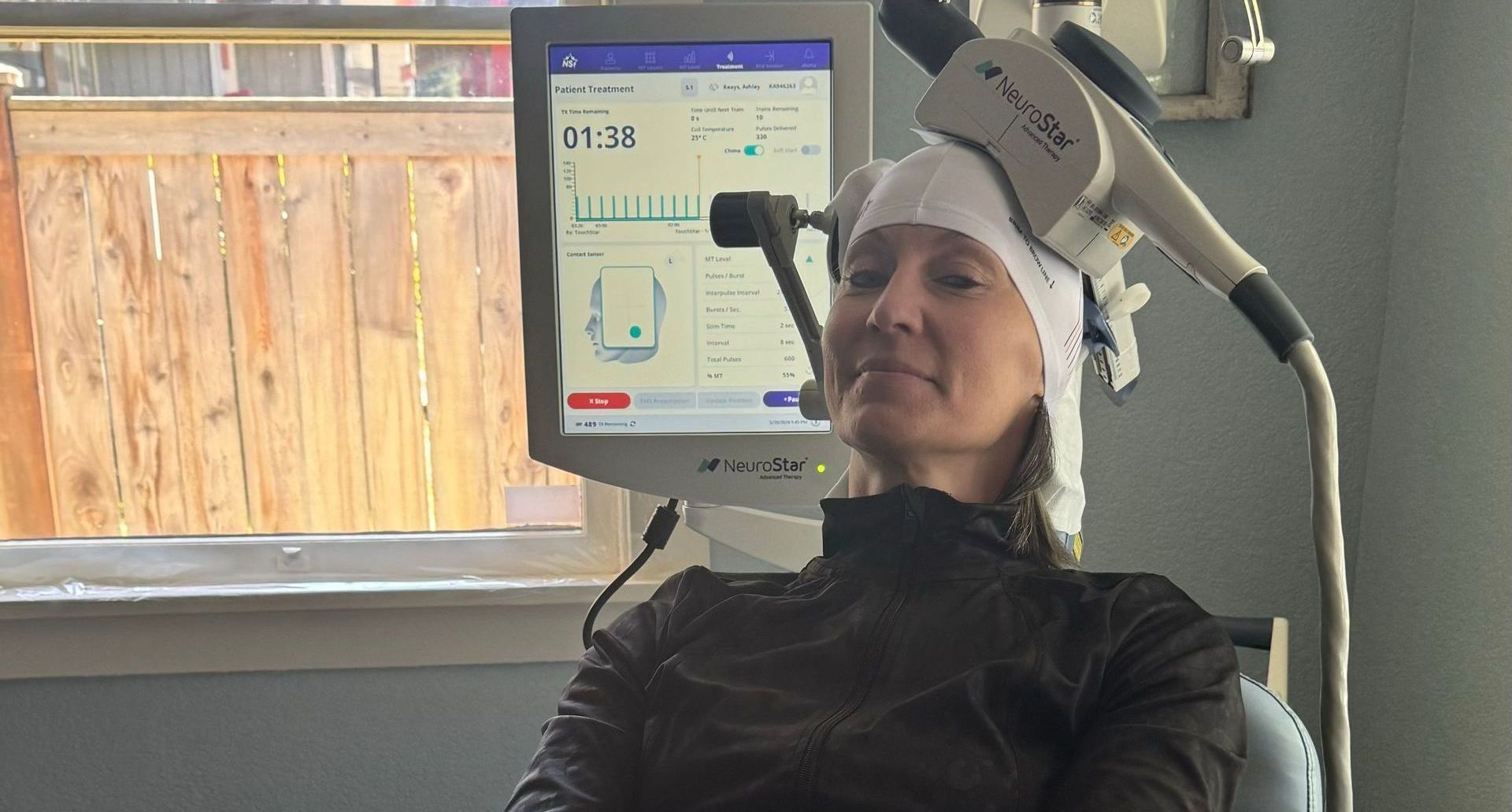
TMS works by delivering magnetic pulses to specific areas of the brain involved in mood regulation. For depression, the primary target is the left dorsolateral prefrontal cortex - a region that is typically underactive in people with major depressive disorder. Repeated stimulation over a course of treatment helps restore more normal activity patterns in these neural circuits.
What TMS does not do is change how you think. It does not teach coping skills, restructure unhelpful thought patterns, or help you process experiences that may be contributing to your symptoms. That is what therapy does.
This is not a limitation of TMS - it is simply a different mechanism. The two approaches address different dimensions of the same condition. TMS creates the neurological conditions for improvement; therapy builds the cognitive and behavioural skills to sustain it. Used together, each makes the other more effective.
What Is CBT and Why Does It Pair Well With TMS?
Cognitive Behavioural Therapy (CBT) is one of the most extensively researched psychological treatments available. It is based on the principle that thoughts, feelings, and behaviours are interconnected - and that changing unhelpful thought patterns can directly improve mood and reduce symptoms.
In practice, CBT helps patients identify automatic negative thoughts (such as catastrophising, black-and-white thinking, or self-blame), examine their accuracy, and replace them with more balanced, realistic perspectives. It also addresses behavioural patterns - particularly avoidance and withdrawal - that tend to maintain and deepen depression.
The pairing with TMS is logical. TMS can lift the neurological floor - reducing the severity of depressive symptoms enough for a patient to engage meaningfully in therapy. Many patients find that CBT feels impossible when they are at their lowest; the cognitive effort required is simply too great. TMS can change that. As brain activity normalises, the capacity to engage with and benefit from therapy increases.
Conversely, the insights and skills developed in CBT help protect the gains made through TMS.
Depression tends to recur, and one of the strongest predictors of relapse is the absence of coping skills when symptoms begin to return. CBT directly addresses this vulnerability.
We Accept Insurance
Take a quick 1-minute quiz to check if you meet typical insurance criteria for TMS. It’s an easy way to see if you may qualify - no pressure, no commitment. If you're exploring other treatments or just want to talk it through, Get in touch. We're here to help you understand your benefits and next steps.





What Is ERP and When Is It Relevant?
Exposure and Response Prevention (ERP) is the gold-standard psychological treatment for Obsessive-Compulsive Disorder (OCD). It involves gradually and systematically exposing patients to the thoughts, images, or situations that trigger obsessive anxiety - while deliberately refraining from the compulsive responses that would normally provide temporary relief.
The mechanism is straightforward but challenging to execute: repeated exposure without the compulsive response teaches the brain that the feared outcome does not occur, and that anxiety, if tolerated, naturally diminishes. Over time, the obsessive triggers lose their grip.
TMS for OCD targets the medial prefrontal cortex and anterior cingulate cortex - areas involved in the error-signalling and anxiety loops that drive obsessive-compulsive cycles. By modulating activity in these regions, TMS can reduce the intensity of obsessive urges and the distress associated with them, thereby making ERP more tolerable and more effective.
For patients who have found ERP extremely difficult to sustain - because the anxiety triggered during exposure feels unbearable - combining it with TMS can make a meaningful difference to what is achievable in therapy sessions.
What the Research Shows
The evidence base for combining TMS with psychotherapy is growing. Studies examining TMS alongside CBT for depression have found that combination treatment produces greater symptom reduction and lower relapse rates than either treatment alone. The effect appears to be additive rather than simply parallel - the two treatments enhance each other’s outcomes rather than just contributing independently.
For OCD, the combination of TMS and ERP is increasingly recognised as a more powerful approach than medication or ERP alone, particularly for patients with severe or treatment-resistant presentations. Research published in psychiatric journals has found that TMS delivered before or during ERP sessions can improve engagement with the therapy and accelerate symptom reduction.
The broader principle - that neurological and psychological interventions work better together than in isolation - is well-supported across the literature on treatment-resistant mental health conditions.
How Care Coordination Works in Practice
One of the genuine advantages of receiving care at Creative Wellness TMS is that counseling, medication management, and TMS are all available under one roof. This is not the norm in mental healthcare. Most patients receiving TMS from one provider are seeing a therapist at a completely separate practice, with no formal communication between the two clinicians.
That fragmentation is a problem in practice. If your TMS team doesn’t know what’s being addressed in therapy - and your therapist doesn’t know where you are in your TMS course - the treatments operate in parallel rather than in concert. Timing, pacing, and clinical priorities can fall out of alignment.
At Creative Wellness, where both services are provided internally, coordination is built into the process. Your TMS clinician and therapist share relevant clinical information and can adjust the pace and focus of each treatment based on how you are progressing overall.
If you are already working with an external therapist and want to begin TMS, that relationship does not need to end. What matters is that there is a clear line of communication.
Our team is experienced in working alongside external providers and will establish a shared understanding of your treatment goals from the outset.

Interested in learning more?
Schedule a consultation to see if TMS could be right for you.
Visit our contact page or call 253-900-1605 to speak with our team.
Timing: When Should Therapy Begin Relative to TMS?
There is no single correct answer, and the right approach depends on where you are clinically when you start TMS. A few practical considerations:
- If you are already in therapy and functioning well enough to engage with it, continuing through your TMS course is generally recommended. Stopping therapy during TMS removes a protective factor.
- If you have not yet started therapy and your symptoms are severe, it may make sense to begin TMS first and introduce therapy once your baseline has improved enough for you to engage meaningfully.
- Post-TMS therapy is strongly worth considering even for patients who did not engage in therapy during treatment, as a way of consolidating gains and reducing relapse risk.
Your clinician will discuss timing with you directly during your evaluation and will factor in your current symptom severity, your history with therapy, and your practical schedule.
The Case for Integrated Care
TMS alone can produce significant, lasting improvement. But the evidence is consistent: patients who combine it with targeted psychological therapy do better. CBT addresses the thought patterns that sustain depression. ERP dismantles the compulsive cycles that drive OCD. Both are more accessible, and their effects more durable, when the neurological groundwork has been laid by TMS.
If you’re exploring TMS and want to understand how it might work alongside your existing or planned therapy, speak with the team at Creative Wellness TMS. We’ll help you build a treatment plan that addresses all the dimensions of your condition - not just one of them.
Do I have to do therapy alongside TMS?
No — TMS can be undertaken as a standalone treatment and many patients do so successfully. Therapy is not a requirement. That said, the evidence for combining the two is strong, and we will always discuss the option with you as part of your treatment planning.
Can I continue seeing my current therapist while receiving TMS at Creative Wellness?
Yes. You do not need to change therapists to receive TMS here. We are happy to work alongside your existing provider and will communicate with them where clinically appropriate, with your consent.
How is ERP different from standard CBT?
CBT is a broad framework used across many conditions, focused on identifying and restructuring unhelpful thoughts and behaviours. ERP is a specific CBT-based technique developed for OCD, centred on confronting obsessive triggers without performing compulsive responses. If you have OCD, ERP is the recommended approach rather than general CBT.